
Zippers are so common that most of us rarely pause to think about how they work. Yet this small mechanical system quietly supports entire industries, from fashion and luggage to aerospace and medical equipment. Understanding the mechanics of zippers reveals how precise engineering, smart materials, and elegant design come together to solve a simple but universal problem: fastening two flexible edges reliably and repeatedly.
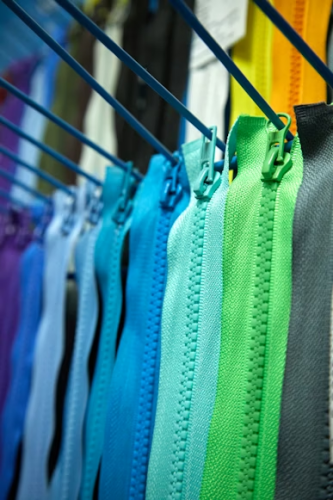
Why Zippers Matter More Than We Realize
At first glance, a zipper may seem trivial compared to complex machines like engines or robots. But its everyday reliability hides an impressive engineering achievement. A zipper must withstand tension, bending, dirt, moisture, thousands of cycles of opening and closing, and constant human handling—all while remaining lightweight, compact, and inexpensive.
Without zippers, modern clothing would be slower to use, less fitted, and more fragile. Bags would be less secure. Protective gear would be harder to seal. The zipper is a classic example of how small mechanical systems often carry an outsized functional and economic impact.
The Core Components of a Zipper
Every zipper, regardless of its application, relies on the same fundamental parts working in harmony.
The Teeth (Elements)
The teeth are the most recognizable part of a zipper. Each tooth is a precisely shaped mechanical element designed to interlock with its neighbor from the opposite side. When engaged correctly, these interlocking teeth form a continuous chain that resists separation under tension.
Teeth can be made from metal, molded plastic, or nylon coils. Each material changes how the zipper behaves under stress, how flexible it feels, and how resistant it is to wear and corrosion.
The Tape
The tape is the fabric strip that holds the teeth in place. It transfers forces from the garment or object to the teeth themselves. Although it looks passive, the tape plays a key mechanical role: it absorbs bending stresses and distributes pulling forces evenly across the zipper chain.
The Slider
The slider is the moving engine of the zipper. As it travels up or down, it forces the teeth to either engage or disengage. Internally, the slider is shaped like a Y-shaped channel that precisely aligns each tooth so they lock together in the correct sequence.
Even a slight deviation in slider geometry can cause misalignment, jamming, or weak closure.
The Stops
Top stops prevent the slider from coming off the zipper at the upper end. Bottom stops hold the two halves together at the base. These small metal or plastic parts protect the entire system from complete failure during normal use.
How the Zipper Actually Works
The basic zipper mechanism relies on guided constraint and mechanical interlocking.
As the slider moves upward, it narrows the gap between the two rows of teeth. The internal channels of the slider force each tooth into the precise angle and position needed to mesh with the opposing tooth. Once past the narrowest point of the slider, the teeth are locked in place by their geometry.
When the slider moves downward, it reverses the process. The wedge shape separates the interlocked teeth in a controlled sequence, preventing random disengagement.
This process works only because of tolerance control—the careful management of dimensional precision. Teeth must be manufactured to exact sizes so that they interlock smoothly without excessive friction or looseness.
Materials Science Inside the Zipper
The performance of a zipper depends heavily on the materials used in its construction.
Metal Zippers
Metal zippers are traditionally made from brass, aluminum, or nickel alloys. They offer high strength and resistance to abrasion, making them common in jeans, leather goods, and heavy-duty gear.
However, metal teeth are heavier, noisier, and more susceptible to corrosion if not properly treated. They also transmit more force directly to the tape, which can cause fabric wear over time.
Molded Plastic Zippers
Plastic teeth are injection-molded onto the tape. These zippers are lighter than metal and resist corrosion better. They work well in outdoor clothing, sports gear, and marine environments.
Their mechanical strength is lower than metal, but improved polymer blends have narrowed that gap significantly.
Coil (Nylon) Zippers
Coil zippers use a continuous spiral of nylon stitched onto the tape. This design offers exceptional flexibility and smooth motion. Coil zippers are quieter, lighter, and easier to curve around complex shapes.
Their main limitation is lower load-bearing capacity, which restricts their use in heavy-duty applications.
Friction, Force, and Mechanical Efficiency
Every time you pull a zipper, you overcome friction between the slider and teeth, as well as between interlocking elements. Engineers balance two competing demands:
- Low friction for smooth operation
- High holding force when closed
If friction is too low, the zipper may slide open under tension. If friction is too high, the zipper becomes difficult to operate and wears out faster.
Lubrication coatings, polished surfaces, and carefully selected plastics all contribute to managing this balance. Even humidity and dust can change how a zipper feels, which is why some outdoor zippers are designed specifically to operate under contaminated conditions.
Stress Distribution and Failure Points
Zippers fail in predictable ways, and each failure reveals something about their mechanical design.
Tooth Deformation
Excessive tension can bend metal teeth or stretch plastic teeth out of alignment. Once one tooth fails, the load redistributes unevenly, often triggering progressive failure along the chain.
Slider Wear
Over time, the internal channels of the slider wear down. When this happens, teeth no longer align properly, causing partial engagement or spontaneous separation.
Tape Tearing
If the fabric tape is weaker than the teeth, stress concentrates along the stitching line. This is common in poorly constructed garments, where the zipper itself outlasts the surrounding material.
Engineers design zippers so that failure occurs gradually rather than catastrophically. A zipper that fails slowly can often still function temporarily, giving the user time to replace it.
Specialized Zippers for Technical Uses
Zippers are not limited to everyday clothing. Specialized designs support critical technical applications.
Waterproof and Airtight Zippers
Dry suits, chemical protective suits, and pressurized equipment require zippers that seal completely against water and air. These zippers use rubberized coatings, compression seals, and unusually rigid structures to prevent leakage under pressure.
Fire-Resistant Zippers
In firefighting and industrial safety gear, zippers must survive extreme temperatures. They use heat-resistant metals and aramid tapes that do not melt under high heat.
Medical and Aerospace Zippers
In medical devices and aerospace equipment, zippers must meet strict standards for reliability, sterility, and failure tolerance. In these settings, a zipper is treated as a safety-critical mechanical component.
The Manufacturing Precision Behind Mass Production
One of the most remarkable aspects of zipper engineering is not just the design itself, but how it is manufactured at scale.
Modern zipper production lines stamp or mold thousands of identical teeth per minute with tolerances measured in fractions of a millimeter. Automated systems attach these teeth to fabric tape, assemble sliders, and perform quality control using optical inspection and mechanical stress tests.
This level of precision ensures that a zipper made in one factory can smoothly operate with components made in another, anywhere in the world. That interchangeability is a hallmark of mature mechanical engineering.
Zippers as an Example of Constraint-Based Design
From an engineering perspective, the zipper is a classic example of constraint-based motion design. The slider forces the teeth to move along a single, controlled path. The teeth themselves are shaped so that they can lock in only one orientation.
There is no active decision-making in the zipper. The intelligence is built into the geometry. This passive precision is what allows a zipper to function reliably without motors, springs, or electronics.
Cultural and Industrial Impact of the Zipper
Before the widespread adoption of the zipper in the early 20th century, buttons and hooks dominated clothing design. The zipper transformed how garments were fitted, enabling tighter silhouettes, faster dressing, and new design possibilities.
Industrially, zippers enabled mass production of reliable enclosures for bags, tents, uniforms, and protective gear. Entire segments of modern fashion, travel, and safety equipment evolved around the assumption that fast, repeatable fastening was possible.
The zipper did not merely improve existing products; it reshaped expectations of convenience and durability.
Common Zipper Problems Explained Mechanically
Understanding zipper mechanics makes everyday problems easier to diagnose.
- Zipper separates after closing: The slider has worn and no longer applies enough inward pressure to force full tooth engagement.
- Zipper jams: Misaligned teeth, fabric caught in the slider, or debris disrupting the channel geometry.
- Zipper feels rough: Increased friction due to corrosion, dust, or surface wear.
- Zipper pull breaks off: A fatigue failure caused by repeated bending at the same stress point.
These issues highlight how even a small mechanical system follows the same failure principles as large machines.
Why the Zipper Still Has No True Replacement
Despite constant innovation in materials and fastening technologies, no alternative has replaced the zipper at scale. Magnetic closures, Velcro, snaps, and hook systems all serve niche roles, but none offer the same combination of:
- Compact size
- High holding strength
- Precise alignment
- Long-term reliability
- One-handed operation
The zipper occupies a unique mechanical niche that remains unmatched more than a century after its widespread adoption.
Key Takeaways
- A zipper is a precisely engineered mechanical system based on constrained motion and interlocking elements.
- The slider is the active component that aligns and locks the teeth through geometric control.
- Different materials—metal, plastic, and nylon—optimize zippers for strength, flexibility, or corrosion resistance.
- Friction and stress distribution determine how smoothly a zipper operates and how it eventually fails.
- Specialized zippers serve critical roles in waterproofing, fire protection, medical safety, and aerospace engineering.
- High-precision mass production makes zippers globally interchangeable and reliable.
- Despite its simplicity, the zipper remains one of the most efficient fastening systems ever created.
FAQ
Why do zippers sometimes separate even when fully closed?
This usually happens when the slider wears out and can no longer force the teeth into full engagement.
Are metal zippers always stronger than plastic ones?
Metal zippers generally handle higher loads, but modern plastic and coil zippers can outperform metal in flexibility, corrosion resistance, and lightweight applications.
Can a damaged zipper be repaired permanently?
In many cases, replacing the slider restores full function. If the teeth or tape are damaged, permanent repair is more difficult.
Why do waterproof zippers feel stiff?
They use rigid sealing layers and compression designs that sacrifice flexibility for airtight and watertight performance.
Do zippers wear out faster in cold weather?
Cold temperatures increase material stiffness and friction, especially in plastics, which can accelerate wear and jamming.
Conclusion
The zipper is a masterclass in quiet engineering. With no motors, electronics, or complex mechanisms, it delivers durability, precision, and ease of use through geometry, materials science, and mechanical constraints alone. Its design reflects a powerful engineering truth: the most effective tools are often not the most complex, but the most precisely understood. Every time a zipper slides smoothly into place, it demonstrates how thoughtful mechanical design can turn a simple idea into a global standard.