Throughout history, science has advanced not through steady accumulation alone, but also through transformative moments—discoveries that redefined entire fields of knowledge. These pivotal breakthroughs often overturn long-held assumptions, challenge prevailing theories, and open new avenues for exploration. Understanding these moments provides insight into how science evolves and why curiosity, rigor, and persistence are essential to progress.
Defining a Scientific Turning Point

A scientific turning point is more than a single experiment or observation; it is an event or discovery that changes the conceptual framework of a discipline. Such moments can arise from theoretical insights, empirical evidence, or technological innovations. What distinguishes them is their far-reaching impact—they not only answer a question but also redefine what questions are worth asking.
For example, Isaac Newton’s formulation of classical mechanics in the 17th century did more than describe motion; it provided a unified framework that governed physics for centuries. Newton’s laws shifted the field from fragmented observations to a coherent, predictive system. Similarly, James Clerk Maxwell’s equations in the 19th century unified electricity and magnetism, laying the groundwork for modern physics and telecommunications.
Unexpected Observations That Revolutionized Understanding
Many groundbreaking discoveries began as anomalies—unexpected observations that defied conventional wisdom. These moments highlight the importance of careful observation and the willingness to investigate the unfamiliar.
One notable case is the discovery of penicillin by Alexander Fleming in 1928. Fleming’s observation that mold inhibited bacterial growth was initially a minor laboratory curiosity. Yet, by pursuing this anomaly, he catalyzed the development of antibiotics, revolutionizing medicine and public health worldwide. Similarly, the cosmic microwave background radiation discovered by Arno Penzias and Robert Wilson provided empirical support for the Big Bang theory, reshaping cosmology.
These examples demonstrate that attentiveness to detail, coupled with curiosity and intellectual flexibility, can transform a routine experiment into a turning point for an entire discipline.
The Role of Theoretical Breakthroughs
Not all transformative moments originate in the laboratory. Theoretical breakthroughs can shift scientific understanding even before empirical verification. Albert Einstein’s theory of relativity fundamentally changed concepts of space, time, and gravity. Initially, it challenged deeply entrenched Newtonian ideas, but its predictions have been repeatedly confirmed, influencing physics, cosmology, and technology.
Theoretical advances often function as frameworks for interpreting experimental data, guiding subsequent discoveries. For instance, the development of quantum mechanics in the early 20th century arose from theoretical puzzles—blackbody radiation, the photoelectric effect, and atomic spectra—that classical physics could not explain. These theoretical models reshaped chemistry, material science, and electronics.
Technological Innovations as Catalysts
Technology itself can create transformative scientific moments by enabling observations that were previously impossible. Instruments such as the telescope, microscope, particle accelerators, and spectrometers expand the boundaries of perception, revealing phenomena that challenge established theories.
For example, the invention of the electron microscope allowed scientists to observe cellular structures at nanometer resolution, profoundly impacting biology and materials science. Similarly, the Large Hadron Collider facilitated the discovery of the Higgs boson, confirming a critical component of the Standard Model of particle physics.
These technological enablers illustrate that shifts in science are not only about ideas but also about the tools that allow those ideas to be tested and visualized.
Cross-Disciplinary Discoveries
Some transformative moments occur at the intersection of fields. When methodologies or insights from one discipline are applied to another, entirely new domains of knowledge can emerge.
A prime example is the discovery of DNA’s double-helix structure. While genetics, chemistry, and X-ray crystallography were separate fields, the integration of their knowledge by Watson, Crick, Franklin, and Wilkins enabled a breakthrough that revolutionized biology and medicine. Similarly, computational models from physics now guide climate science, epidemiology, and neuroscience, demonstrating the value of interdisciplinary thinking.
Cross-disciplinary approaches often reveal patterns or principles overlooked within a single field, accelerating the pace of discovery.
Serendipity and Prepared Minds
Many transformative discoveries combine chance with preparation. Louis Pasteur famously remarked, “Chance favors the prepared mind.” Serendipitous moments—accidental observations or unexpected experimental outcomes—have repeatedly shifted scientific paradigms. However, recognizing their significance requires expertise, attentiveness, and a deep understanding of existing knowledge.
For instance, the discovery of vulcanized rubber by Charles Goodyear was accidental. While experimenting with natural latex, he inadvertently applied heat that created a durable, elastic material. Similarly, cosmic discoveries often emerge from instruments designed for other purposes, such as the detection of radio waves from space that led to new insights about astrophysics.
Serendipity alone is insufficient; transformative discoveries demand the ability to interpret anomalies correctly and act upon them.
Cultural and Societal Context
Scientific turning points do not occur in a vacuum. Cultural, economic, and social conditions influence which discoveries are pursued, recognized, and applied. For example, wartime research accelerated developments in nuclear physics, radar, and computing. Similarly, societal demand for sustainable energy has driven rapid innovation in solar, wind, and battery technologies.
Awareness of the broader context helps explain why some discoveries gain immediate attention while others remain obscure for decades. Gregor Mendel’s work on genetics, largely ignored during his lifetime, became foundational only when the scientific community and societal conditions were ready to integrate it into broader biological understanding.
Case Studies of Transformative Discoveries
Atomic Theory
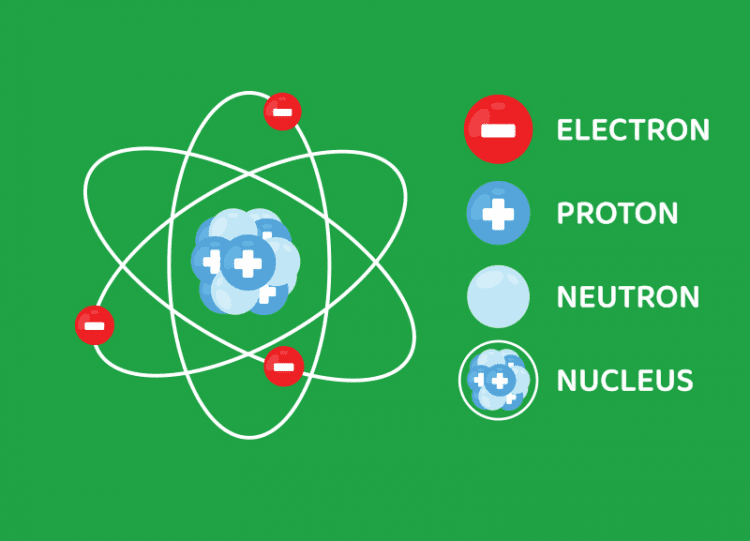
The development of atomic theory exemplifies a scientific revolution spanning centuries. From Democritus’ philosophical musings to Dalton’s formal atomic model, and eventually quantum mechanics, each incremental advance built a framework that fundamentally altered chemistry, physics, and material science.
Evolution by Natural Selection
Charles Darwin’s articulation of evolution by natural selection transformed biology. By providing a unifying mechanism for species diversity, it reshaped taxonomy, ecology, and genetics. Darwin’s insight connected observations across continents, emphasizing the explanatory power of overarching scientific theories.
Plate Tectonics
The acceptance of plate tectonics in the mid-20th century revolutionized geology. It explained phenomena such as earthquakes, mountain formation, and continental drift, which had puzzled scientists for decades. This paradigm shift influenced environmental science, paleontology, and oceanography.
These examples illustrate how pivotal moments not only advance knowledge but also redefine research agendas, methodologies, and education within entire disciplines.
Patterns Across Transformative Moments
Analysis of historical breakthroughs reveals several recurring features:
- Anomalies Trigger Change: Unexpected results often initiate paradigm shifts.
- Integration of Knowledge: Combining data, theory, and methodology across fields accelerates discovery.
- Incremental and Sudden: Transformative moments combine gradual accumulation with defining breakthroughs.
- Technological Enablement: Tools and techniques often make the unseen visible.
- Preparedness: Expertise and insight determine whether serendipitous observations are recognized.
- Societal Relevance: Cultural and economic conditions influence discovery and adoption.
Recognizing these patterns provides guidance for scientists seeking to make meaningful contributions and for institutions prioritizing research investments.
The Human Factor in Scientific Revolutions
Behind every transformative discovery is a network of human decisions, collaboration, and persistence. Curiosity, critical thinking, and the courage to challenge prevailing assumptions are as important as experimental skill or theoretical sophistication. Scientific progress is not deterministic; it depends on interpretation, judgment, and the willingness to act on evidence.
Mentorship, communication, and interdisciplinary collaboration further amplify the potential impact of discoveries. The ability to connect ideas, recognize relevance, and disseminate results determines whether a breakthrough shifts a field or remains an isolated insight.
Key Takeaways
- Transformative scientific moments redefine frameworks, not just facts.
- Unexpected observations and anomalies often catalyze paradigm shifts.
- Theoretical, experimental, and technological advances all contribute to major discoveries.
- Interdisciplinary approaches uncover patterns that single-discipline studies may miss.
- Serendipity requires preparedness and expertise to become a true breakthrough.
- Cultural, societal, and economic factors influence which discoveries are pursued and recognized.
- Incremental and sudden advances interact to reshape entire scientific fields.
Conclusion
Moments that shift science are both rare and profound. They emerge from a confluence of curiosity, observation, theory, and context, reshaping entire disciplines and enabling new questions to be asked. By studying these pivotal discoveries, we gain insight into the mechanisms of progress, the importance of interdisciplinary thinking, and the enduring value of attentive, prepared minds in the pursuit of knowledge. These moments remind us that science is a dynamic, human-driven endeavor, continually evolving as we explore the unknown.